
 Treatments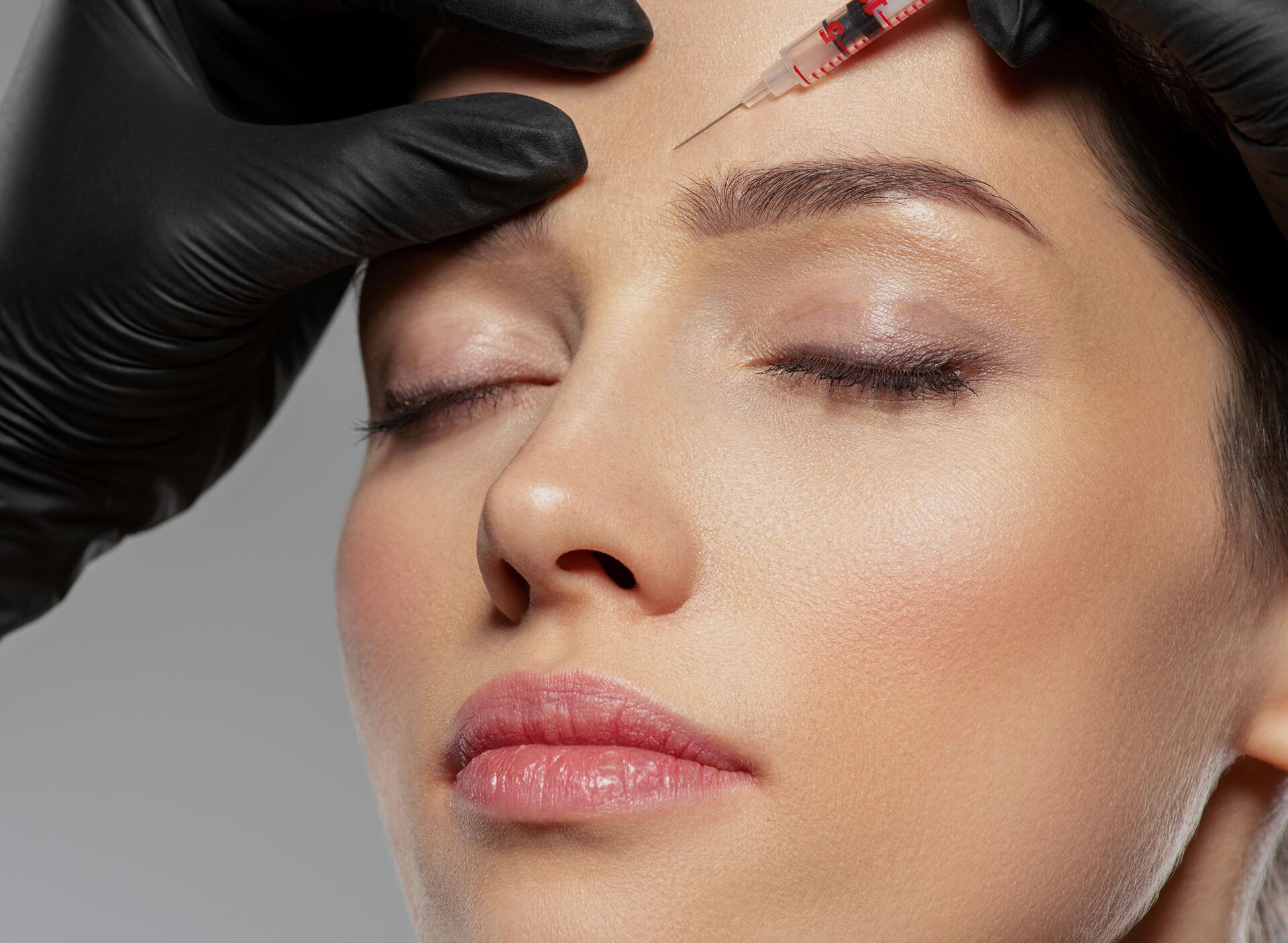






























































Polynucleotides vs Sunekos: What’s the Difference and Which Is Right for Your Skin?
When patients explore non-filler injectable treatments designed to improve skin quality, two names frequently arise: polynucleotides and Sunekos.
Both treatments are regenerative in nature. Both improve skin quality. Neither is designed to add structural volume like dermal fillers.
However, their biological focus, clinical indications and long-term goals differ. Understanding the difference between Polynucleotides vs Sunekos allows patients to make informed, proportionate decisions about skin rejuvenation.
This guide explains how each treatment works within the dermis, who they are best suited for, and how they may be used individually or strategically together.
The Core Clinical Difference
At its simplest:
- Polynucleotides focus on skin repair and dermal conditioning.
- Sunekos focuses on collagen stimulation and hydration.
They address different biological priorities within the skin.
One restores and strengthens. The other stimulates and revitalises.
What Are Polynucleotides?
Polynucleotides are injectable regenerative treatments composed of highly purified DNA fragments.
Their purpose is not to “fill” or aggressively stimulate collagen, but to optimise the internal dermal environment.
How Polynucleotides Work in the Skin
They support:
- Tissue regeneration
- Dermal hydration
- Reduction of oxidative stress
- Improvement of the extracellular environment
- Strengthening of fragile skin
Rather than forcing a dramatic collagen response, polynucleotides help the skin function more efficiently at a cellular level.
Clinical Effects on the Face and Neck
Under the eyes, they can improve:
- Crepey texture
- Skin thinness
- Elasticity
- Overall resilience
On the face and neck, they are particularly useful where skin appears:
- Sun-damaged
- Structurally weakened
- Fine and delicate
- “Weathered” over time
Results are progressive. Skin often appears smoother, stronger and more refined over a course of treatments.
Who Is Best Suited to Polynucleotides?
Patients who may benefit most include:
- Individuals with thin or fragile skin
- Those with visible sun damage
- Patients preparing for laser resurfacing
- Individuals seeking regenerative support rather than correction
Treatment protocol typically involves:
- 3 sessions
- 2–3 weeks apart
- Minimal downtime
The outcome is subtle but biologically meaningful.
What Is Sunekos?
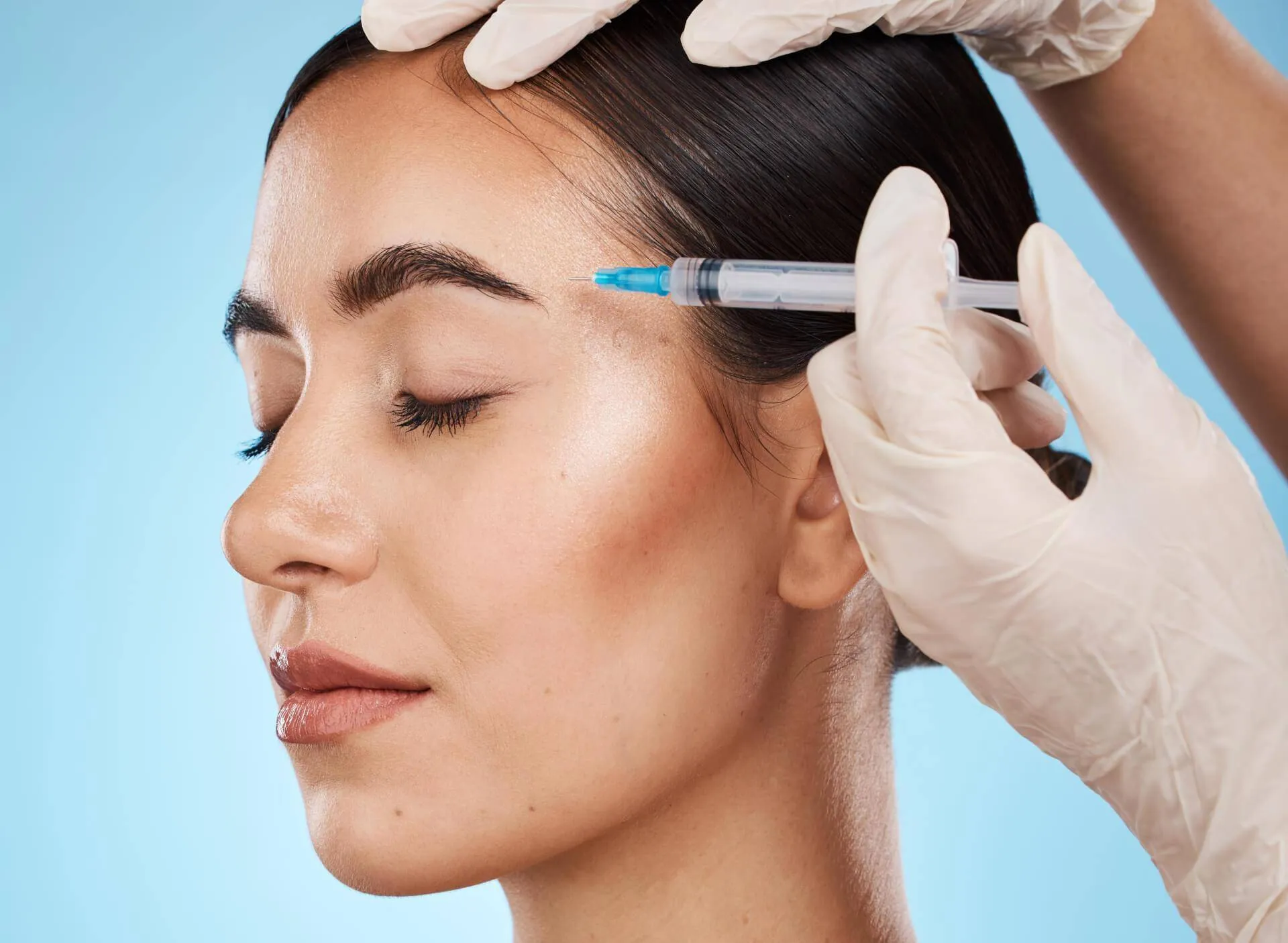
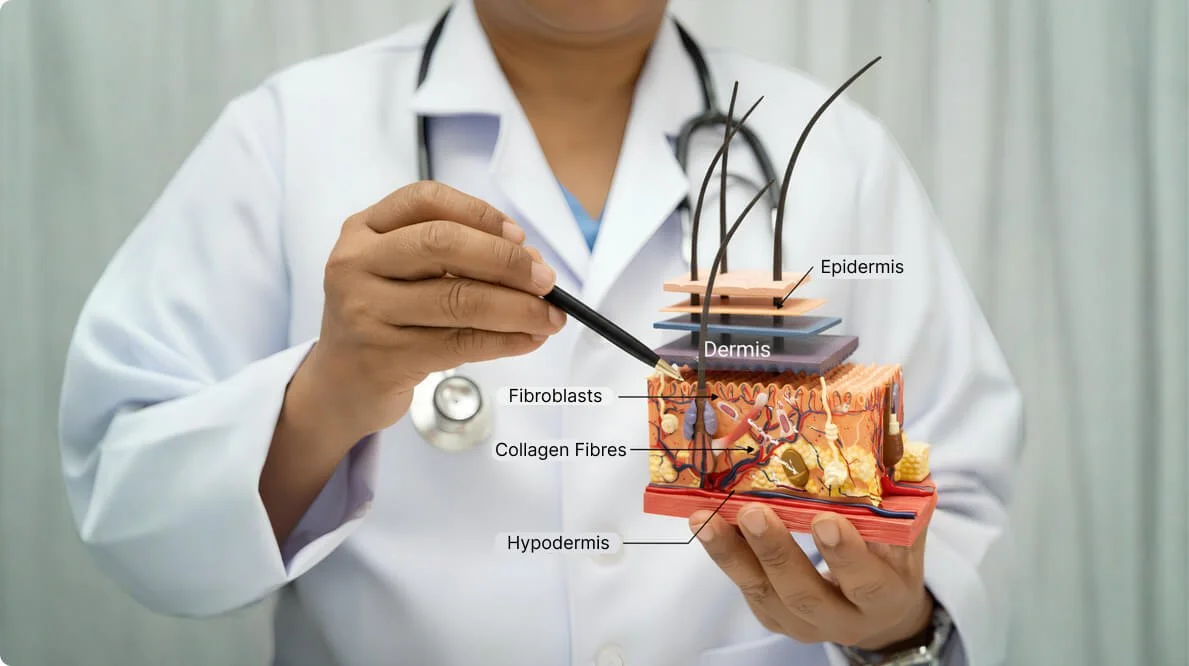
Sunekos is an injectable skin booster that combines hyaluronic acid with a specific amino acid complex.
It is designed to directly stimulate fibroblasts — the cells responsible for collagen and elastin production — while simultaneously improving hydration within the dermis.
How Sunekos Works
Sunekos:
- Stimulates collagen synthesis
- Activates elastin production
- Improves dermal hydration
- Enhances elasticity
- Softens early fine lines
Unlike filler, it integrates within the dermis and does not alter facial volume.
Clinical Effects on Face and Neck
On the face, Sunekos is commonly used to address:
- Early fine lines
- Mild laxity
- Dullness
- Loss of glow
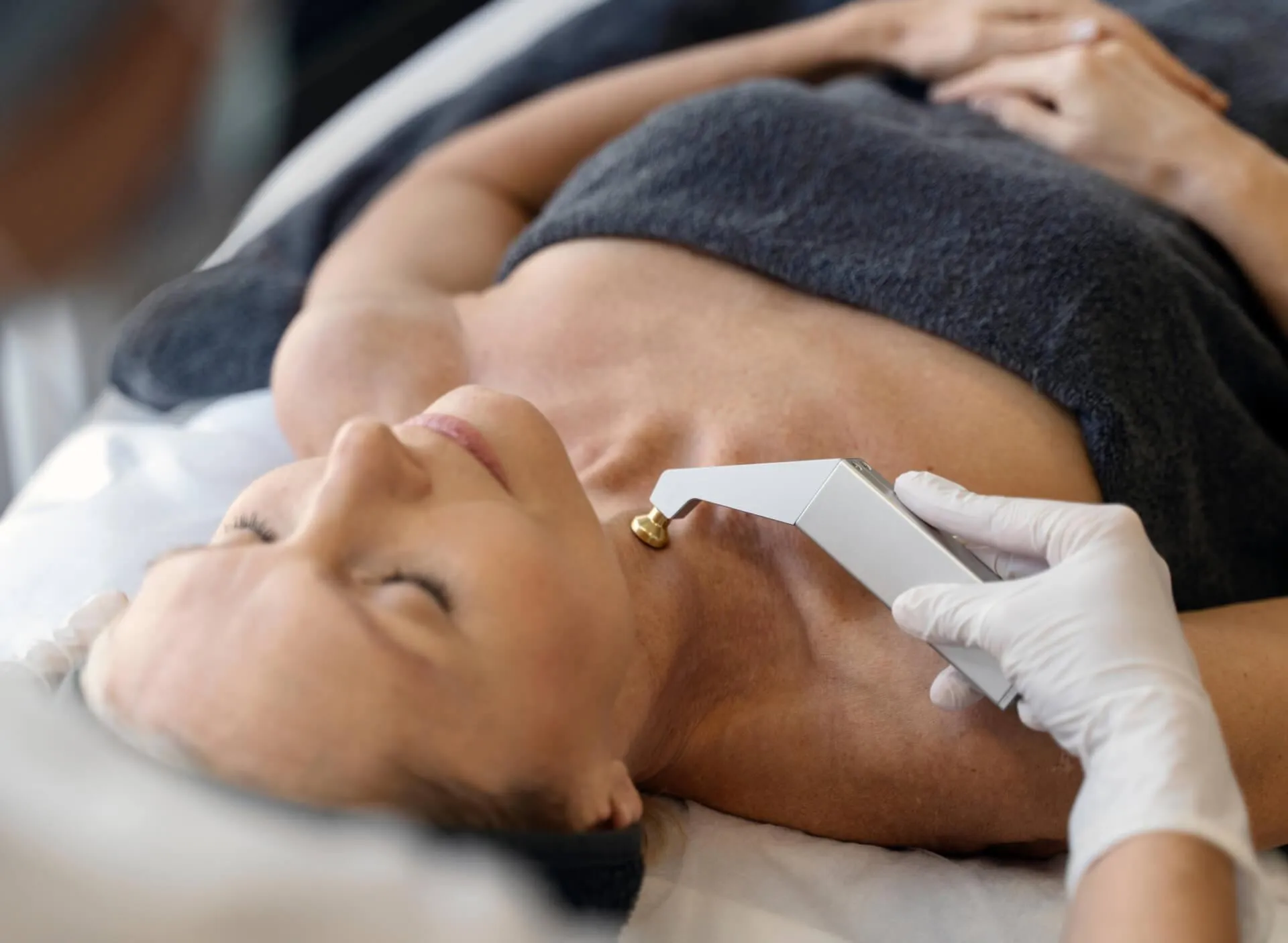
On the neck, it can improve:
- Horizontal lines
- Crepey texture
- Early loss of elasticity
Patients often notice early hydration improvements followed by gradual refinement of lines and improved skin bounce.
Who Is Best Suited to Sunekos?
Sunekos is often chosen for patients experiencing:
- Early signs of ageing
- Fine lines not yet requiring filler
- Mild laxity
- Loss of radiance
Treatment protocol:
- 3–4 sessions
- 14 days apart
- Minimal downtime
The goal is natural revitalisation — fresher, smoother skin rather than visible intervention.
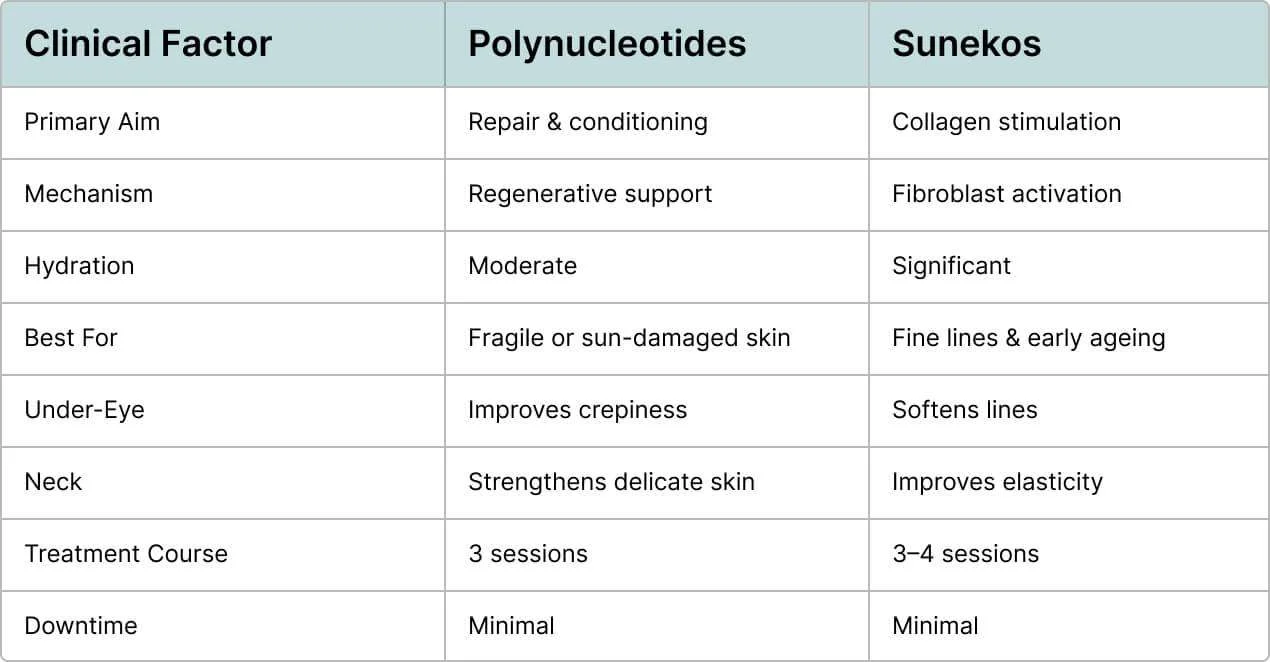
Polynucleotides vs Sunekos: Clinical Comparison
Can Polynucleotides and Sunekos Be Combined?
Yes. In many cases, they are used strategically:
- Polynucleotides to restore skin health
- Sunekos to stimulate collagen
This staged approach allows the dermis to be strengthened before active collagen stimulation.
Safety and Medical Assessment
Both treatments require:
- Comprehensive consultation
- Assessment of skin thickness
- Review of medical history
- Realistic expectation setting
Correct patient selection is essential for proportionate outcomes.
Frequently Asked Questions
Are they fillers?
No. Neither adds structural volume.
Is there downtime?
Mild swelling or redness for 24–48 hours.
Which is better for under-eyes?
Polynucleotides for crepiness. Sunekos for fine lines and hydration.
Which is better for neck ageing?
Polynucleotides for fragile skin; Sunekos for elasticity loss.
Can they prepare skin for laser?
Yes. Polynucleotides are often used prior to CO2 or Erbium laser.
Are they suitable for 40–60 year olds?
Yes. Commonly used for early to moderate ageing.
Final Consideration.
When comparing Polynucleotides vs Sunekos, the decision is not about which treatment is “better,” but about which biological priority your skin currently requires.
If your skin needs repair, strengthening and improved resilience, polynucleotides are often the appropriate starting point.
If your main concern is early fine lines, mild laxity and reduced radiance, Sunekos may be more suitable.
Both treatments aim for natural, proportionate improvement rather than dramatic alteration. A detailed in-person assessment ensures the correct choice is made for your skin’s current condition and long-term goals.